
Smart Cell Fermentation Leads to Large-Scale Lycopene Production
Using Biomanufacturing to Supply High‑performance Materials While Reducing Environmental Impacts
March 12, 2026
New Energy and Industrial Technology Development Organization (NEDO)
Translation of NEDO’s Japanese news release posted on March 12, 2026
Lycopene is in increasing demand for use in cosmetics, dietary supplements, and as a food additive, but traditional production methods impact the environment and compete with food supplies. Under a NEDO project called “Development of Production Technology for Bio‑based Products to Accelerate the Realization of Carbon Recycling,” Harima Chemicals, Inc. and the Research Institute of Innovative Technology for the Earth (RITE) have successfully developed large‑scale fermentation technology to produce lycopene using “smart cells.” These cells are strategically engineered to efficiently produce the desired molecules. Compared with conventional plant extraction or petroleum‑based chemical synthesis, smart cell fermentation can help lower CO2 emissions and avoid competition with food resources while supporting a continuous, stable supply of lycopene.
Commercial‑scale cultivation has already been demonstrated as part of the project. By the end of March 2027, Harima plans to establish an end‑to‑end lycopene manufacturing system based on smart‑cell fermentation and to commence commercial deployment.
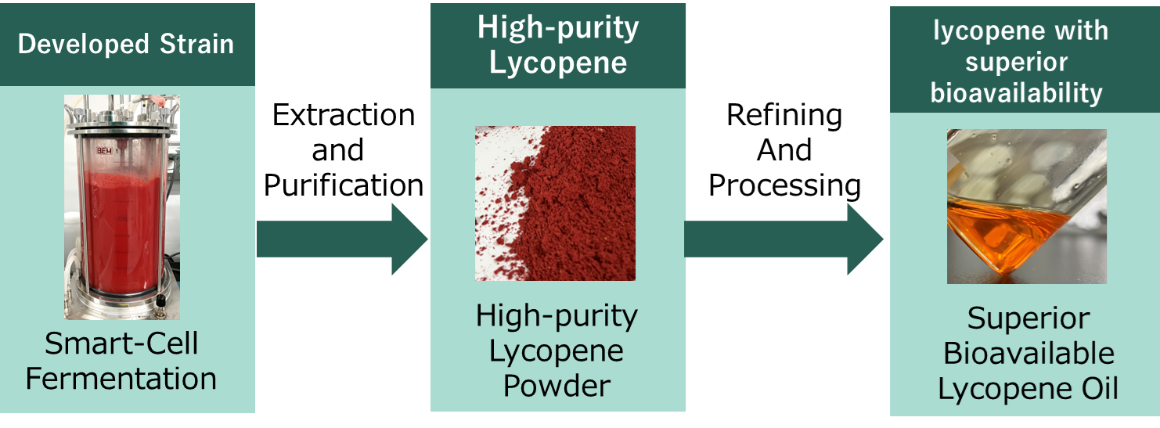
Fig. 1. Smart cell–based lycopene production
1.Background
Biomanufacturing leverages genetic technologies to use plant cells, animal cells, or microorganisms to produce substances. It can be more energy efficient than conventional chemical processes and enables a shift to non‑fossil-fuel-based feedstocks, so it supports a carbon‑circulating society and sustainable economic growth. However, biomanufacturing has faced challenges due to complex processes and inefficient production methods that make it less cost-competitive than petroleum‑derived products.
Lycopene, a naturally occurring red carotenoid with antioxidant functionality, sees demand continuing to grow across the cosmetic, dietary supplement, and food industries. Extracting it from plants is hampered by seasonality, cultivar variability, and quality fluctuations, and petroleum‑based chemical synthesis places burdens on the environment.
Starting in 2020, NEDO began advancing projects*1 to foster the bioeconomy and realize a circular carbon society by developing foundational biomanufacturing technologies, establishing demonstration hubs, and supporting corporate demonstration projects for real-world use of bio‑based products. Harima and RITE joined this effort in 2022, collaborating to develop large‑scale production technology for lycopene using smart cells.
2.Results
Harima and RITE constructed smart cells using bacteria of the genus Corynebacterium as hosts. These have a proven safety record in amino acid production and related applications.
RITE employed genetic engineering techniques like strengthening the biosynthetic pathways for lycopene production and blocking pathways involved in byproduct formation. This resulted in a hundred‑fold improvement in productivity compared to the unmodified strain, allowing them to achieve highly-concentrated, gram‑level titers of lycopene suitable for commercial testing.
Harima developed an industrial process for recovering and purifying lycopene from fermentation biomass, delivering a manufacturing route that reduces CO2 emissions compared to plant extraction or petroleum‑based synthesis and that avoids competition with food resources. They also honed the purification process for smart cell fermented biomass and developed an extremely pure and easy to handle lycopene powder suitable for a wide range of applications.
During cultivation, Harima leveraged the demonstration capabilities of a biofoundry in the Kanto area operated by NEDO project participant Green Earth Institute Co., Ltd. They successfully proved scale‑up in a 3,000‑liter fermenter.
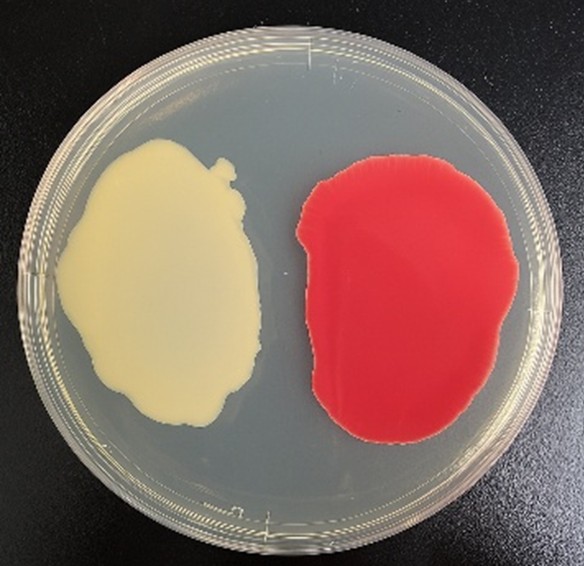
Fig. 2. Development of smart cells showing color change of cells before (left) and after (right) enhancement
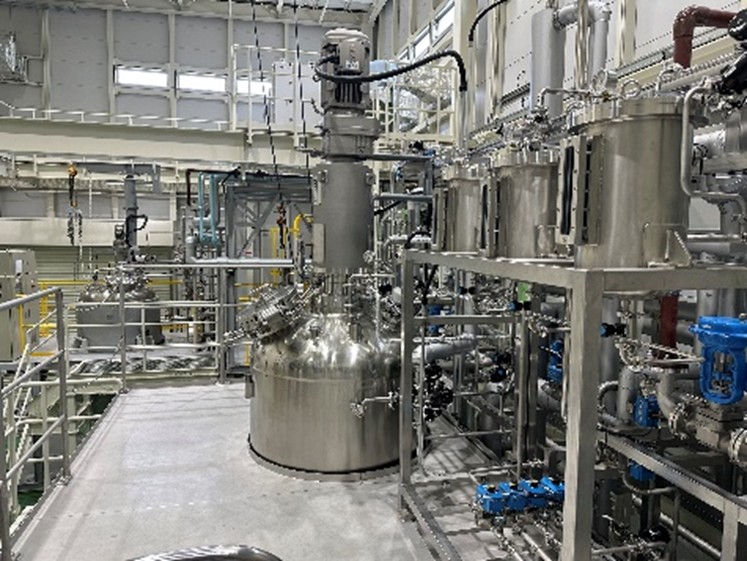
Fig. 3. 3,000-L fermenter at the scale-up demonstration facilities
3. Future Plans
Because carotenoids generally exhibit low bioavailability, Harima plans to introduce a functionalization step that improves it and to include this lycopene in their product lineup. Both the high‑purity and enhanced-functionality lycopene have passed the safety tests required for use in cosmetics. As the company broadens their offerings to meet food and pharmaceutical market needs, they will release final claims regarding functionality and efficacy in accordance with relevant regulations and guidelines.
Harima will roll out the lycopene products developed during the project in stages, delivering value by leveraging the material’s inherent properties. The company plans to begin sampling during fiscal year 2026, which ends March 31, 2027. As they gear up for the start of commercial production, they will continue to strengthen collaboration with other institutions and companies.
[Note]
- *1 Project title: Development of Production Technology for Bio‑based Products to Accelerate the Realization of Carbon Recycling
- Project period: FY2022–FY2024
- Development of Production Technology for Bio-based Products to Accelerate the Realization of Carbon Recycling
- Reference: Harima Chemicals News
- Development of High-Purity and High-Bioavailability Lycopene, and Launch of Sample Distribution
4.For more information, please contact:
Biotechnology and Materials Department at NEDO
Tel: +81-44-520-5220 E-mail: bioproduction[*]ml.nedo.go.jp
To send an inquiry by E-mail, please replace [*] with @ in the above email addresses.