
Europe's First 30 MW-Class 100% Hydrogen Gas Turbine Power Generation Facility Begins Operation in Germany
― Advancing Hydrogen Power Generation Through Japan-Germany Collaboration―
November 24, 2026
New Energy and Industrial Technology Development Organization (NEDO)
Kawasaki Heavy Industries, Ltd.
RWE AG
Translation of NEDO’s Japanese news release posted on November 9, 2026
NEDO, Kawasaki Heavy Industries, Ltd., and German energy company RWE AG held an opening ceremony for a power generation facility in Lingen, Lower Saxony, Germany on November 6 at the hydrogen park of RWE’s Emsland Power Station. The effort is part of the Hydrogen Gas Turbine Power Generation Demonstration Project to Realize Hydrogen Power Generation in Europe (Germany), under NEDO’s International Demonstration Project on Japan’s Technologies for Decarbonization and Energy Transition.
With this facility, which uses Kawasaki’s 30 MW-class L30A gas turbine, RWE aims to commercialize a system that stores surplus renewable electricity as hydrogen and converts it back into electricity when needed. To this end, RWE is also developing infrastructure to produce, transport, and use the hydrogen derived from renewable energy.
This demonstration project will help promote the large-scale use of hydrogen energy while contributing to decarbonization and stable energy supplies in Europe and worldwide, and was made possible in part thanks to the long-standing cooperation between NEDO and the German government-affiliated organization NOW GmbH (the National Organisation for Sustainable Mobility).
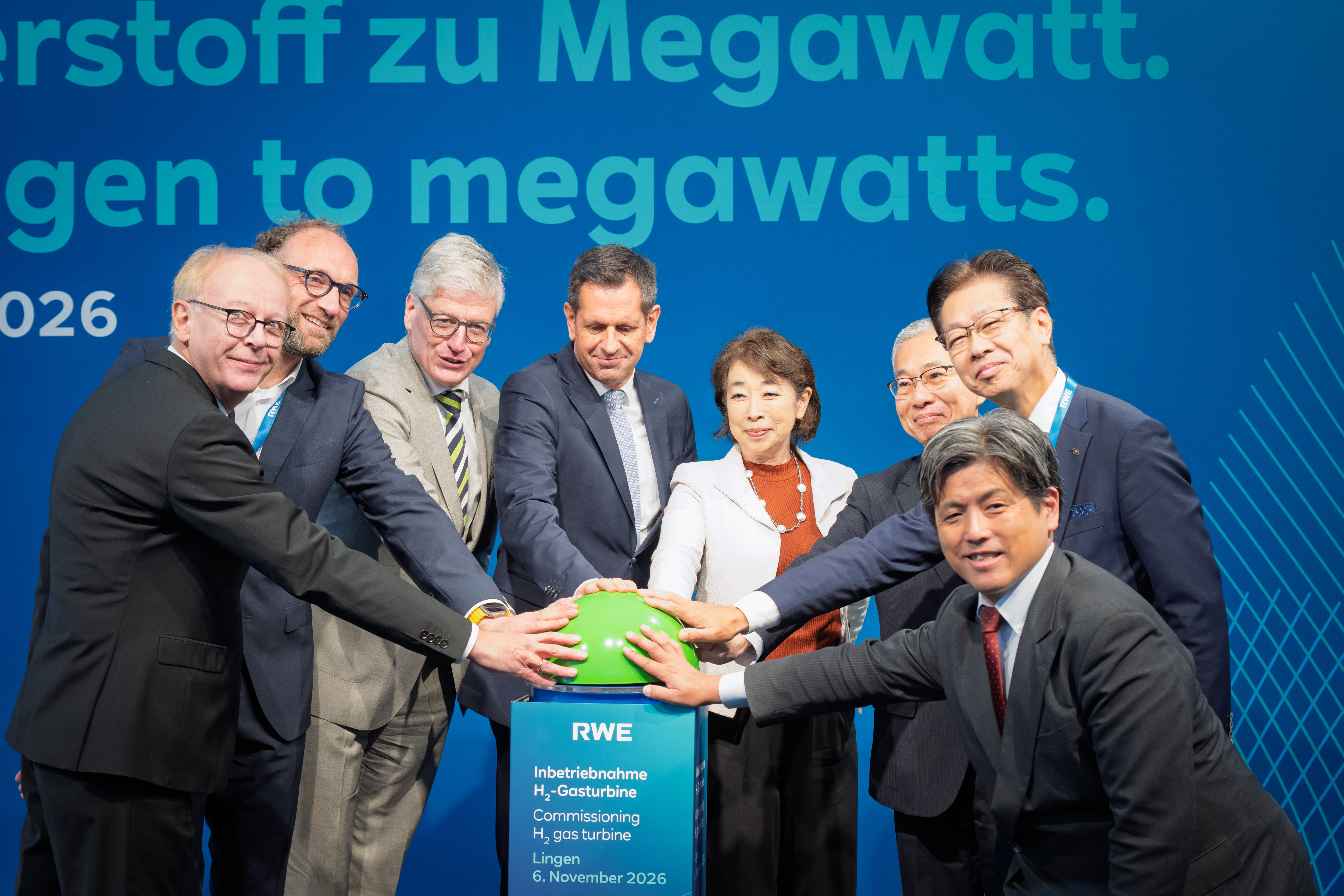
1. NEDO’s International Demonstration Project
Japanese technologies that support hydrogen utilization and the transition to a decarbonized society are strongly aligned with S+3E, or safety, energy security, economic efficiency, and environmental sustainability. However, given that conditions in Japan differ from those in other countries, demonstrating effectiveness overseas, as well as facilitating deployment in Japan and internationally, remain key challenges.
Against this background, in FY2021 NEDO selected the Hydrogen Gas Turbine Power Generation Demonstration Project to Realize Hydrogen Power Generation in Europe (Germany)*1 as part of its International Demonstration Project on Japan’s Technologies for Decarbonization and Energy Transition. The long-standing cooperation between
NEDO and NOW*2 also helped make the demonstration project possible. NEDO continues to help expand Japan’s energy industry in domestic and international markets, advance the energy transition and decarbonization in Japan and abroad, and strengthen Japan’s energy security.
2. Project Achievements
The 30 MW-class L30A gas turbine was manufactured at Kawasaki’s Akashi Works. Kawasaki Gas Turbine Europe GmbH, Kawasaki’s European gas turbine subsidiary, then assembled it into a power generation package and installed it at the site. RWE was responsible for the overall planning of the hydrogen power plant and the installation of auxiliary facilities.
The demonstration project is the first of its kind in Europe*3 to conduct hydrogen co-firing and 100% hydrogen-fueled power generation using a 30 MW-class gas turbine.
The gas turbine combustor employs a diffusion combustion system (wet system)*4 that balances economic efficiency and environmentally-friendly performance. The hydrogen-natural gas mix can be adjusted flexibly across the full range from 0% to 100% hydrogen. This allows the same gas turbine to generate power throughout the transition to full-scale hydrogen deployment, supporting phased decarbonization even from initial stages when hydrogen supplies are limited.
3. Next Steps
The demonstration project now moves into the testing phase to evaluate power generation performance using natural gas and carbon-free hydrogen produced with electricity from RWE’s wind power facilities. The tests will confirm compliance with site requirements for emissions, including nitrogen oxides (NOx) and carbon monoxide (CO), as well as combustion stability, durability, and operability.
Projects like this allow NEDO to promote the deployment of Japanese-developed hydrogen and decarbonization technologies at home and abroad to help advance hydrogen utilization and the transition to a decarbonized society. Kawasaki aims to apply the knowledge gained to product development so it can bring the technology to market promptly, accelerating the commercialization of hydrogen power generation in Europe and building a hydrogen supply chain.
-
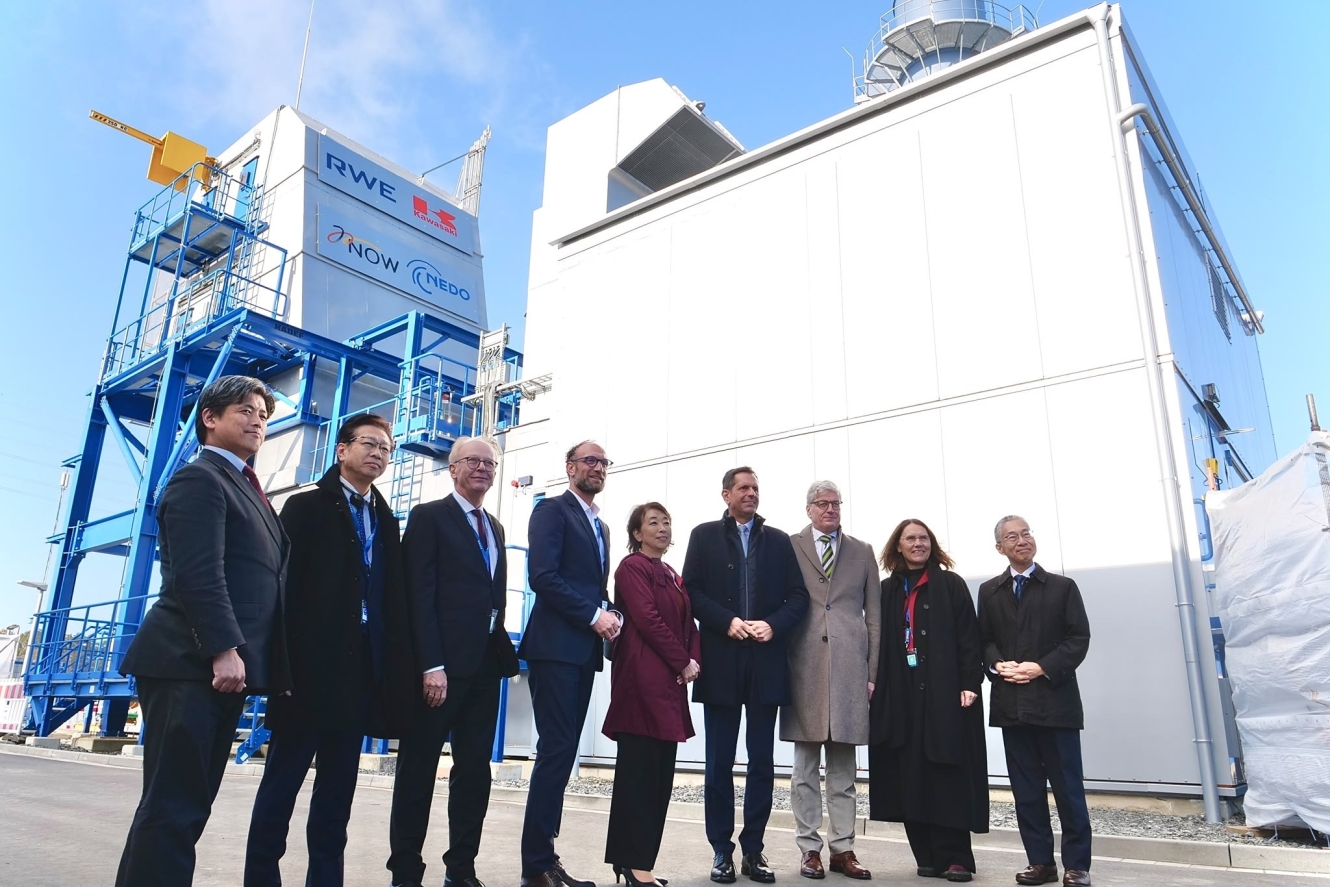 Fig. 2 Hydrogen gas turbine facility and representatives
[Notes]
- *1 Project Overview
- Project Name:Hydrogen Gas Turbine Power Generation Demonstration Project to Realize Hydrogen Power Generation in Europe (Germany)
Project period:FY2021–FY2026
Project overview:Hydrogen Gas Turbine Power Generation Demonstration Project to Realize Hydrogen Power Generation in Europe (Germany) - *2 NOW
- Official name:National Organisation for Sustainable Mobility
- *3 the first of its kind in Europe
- Based on research by Kawasaki as of November 2026.
- *4 diffusion combustion system (wet system)
- A combustion method in which water or steam is injected to reduce NOx emissions. It offers high combustion stability and flexibility for co-firing, although the use of water or steam can make it more difficult to improve power generation efficiency.
4. For more information, please contact
International Liaison Team, Hydrogen and Ammonia Department, NEDO
E-mail: Int-liaison[*]ml.nedo.go.jp
Corporate Communications Division, Kawasaki Heavy Industries, Ltd.
Contact Form
RWE AG
Contact Form
To send an inquiry by email, please replace [*] with @ in the above email address.