
Hydrogen Opens New Opportunities — From Space Exploration to Your Daily Coffee
February 2, 2026
As Japan steps up its efforts to achieve carbon neutrality by 2050, technological innovation is advancing across multiple sectors. Among the areas gaining momentum is hydrogen. Because it emits no CO2 when used as a fuel, hydrogen is drawing growing interest in Japan and around the world as a clean energy option.
Its reach extends well beyond power generation. From cars and trains to factories, households, and even aerospace applications, hydrogen is being explored across a broad spectrum of uses. In doing so, it offers a way to sustain modern life while reducing environmental impact.
NEDO, in collaboration with the Agency for Natural Resources and Energy (ANRE) of the Ministry of Economy, Trade and Industry (METI) and the Japan Hydrogen Association (JH2A), hosted an event titled “Hydrogen Park” at Expo 2025 Osaka, Kansai.
Designed to help visitors better understand the importance and potential of hydrogen, the event brought together the latest technologies across the entire hydrogen value chain, from production and transportation to end-use applications.
This article highlights the technologies showcased at the event, organized into five perspectives: “Production & Transport,” “Power Generation & Industry,” “Mobility,” “Urban & Daily Life,” and “Aerospace.”
-
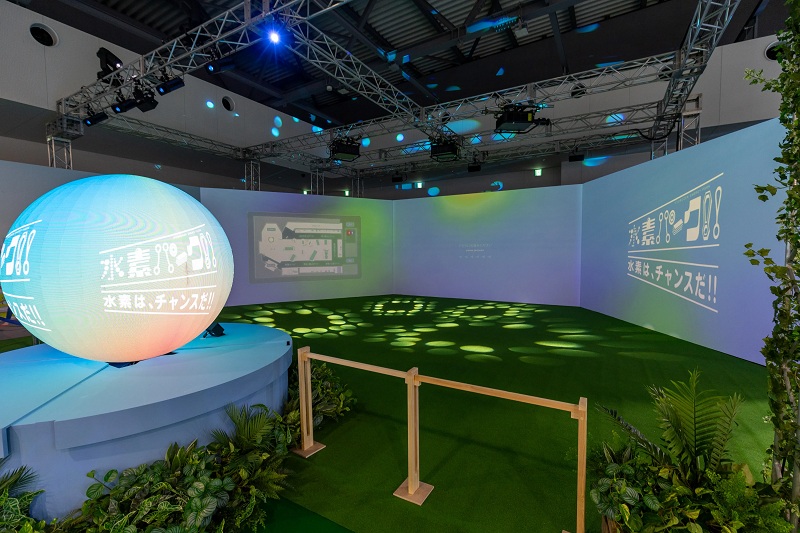 Theater Zone at Hydrogen Park
Production & Transport
Hydrogen is produced by splitting water through electrolysis. When the electricity used in that process comes from renewable sources such as solar power, the result is hydrogen generated without CO2 emissions. This is what is commonly known as “green hydrogen.”
In Japan, the Fukushima Hydrogen Energy Research Field (FH2R), established under a NEDO initiative, has been operating in Namie Town, Fukushima Prefecture, since 2020. With a production capacity of 1,200 Nm³ (normal cubic meters) per hour, the facility’s daily output is equivalent to the monthly electricity consumption of roughly 150 households, or enough hydrogen to fuel about 560 fuel cell vehicles (FCVs).
-
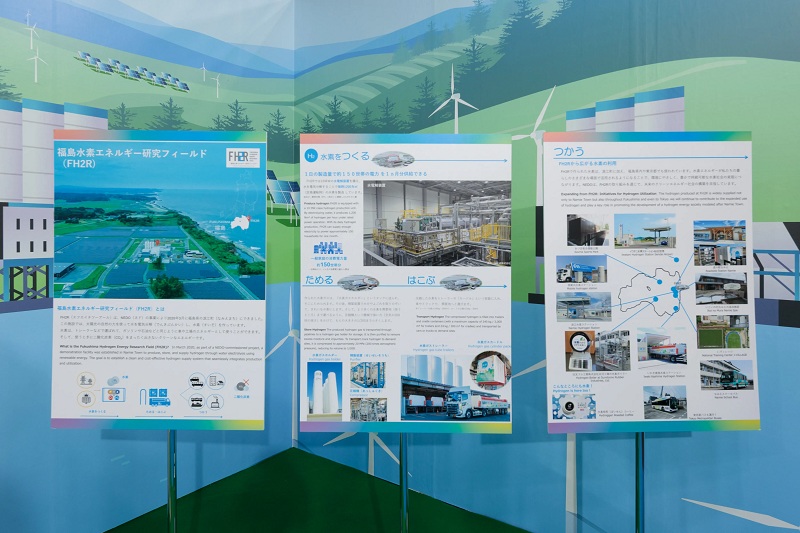 Information panel on the Fukushima Hydrogen Energy Research Field (FH2R), one of the world’s largest hydrogen production research facilities — Exhibited by NEDO
Once produced, hydrogen must be transported to where it will be used. When production takes place overseas, that means shipment by sea. At -253°C, hydrogen becomes a liquid, shrinking to roughly one eight-hundredth of its original volume and making large-scale transport feasible.
At Hydrogen Park, a scale model of a large liquefied hydrogen carrier under development with NEDO support was on display. The vessel will be equipped with four 40,000 m³ tanks capable of maintaining the ultra-low temperatures required for liquid hydrogen over extended periods, allowing it to transport approximately 10,000 tons in a single voyage.
To improve efficiency, the ship is designed to use boil-off gas (BOG), hydrogen that naturally evaporates during transport, as propulsion fuel, thereby lowering CO2 emissions at sea.
The scale of the hydrogen carrier and the dimensions of its storage tanks are modeled on the design of liquefied natural gas (LNG) carriers. This approach offers an advantage: it can help shorten the design process in the future when LNG port infrastructure is converted for hydrogen use. At the same time, liquid hydrogen and LNG differ in their physical properties, meaning LNG technologies cannot simply be applied as they are. A dedicated design optimized for hydrogen is required.
-
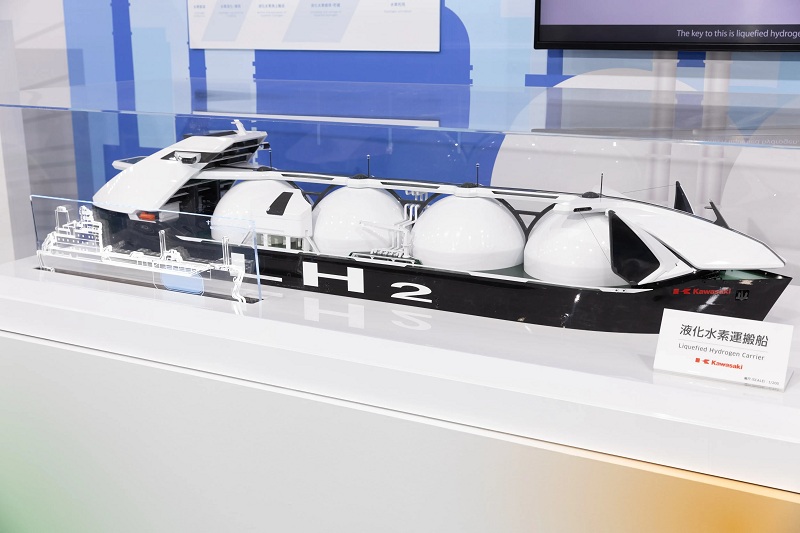 Scale model of a large liquefied hydrogen carrier — Exhibited by Kawasaki Heavy Industries
Power Generation & Industry
After being transported, hydrogen is converted into electricity or heat at its point of use. In Japan, about 40 percent of CO2 emissions come from power generation, and roughly 25 percent from industry. Reducing emissions in these sectors is essential, and hydrogen is expected to play a key role.
Hydrogen gas turbines are one of the technologies being developed to generate electricity using hydrogen as a fuel. At Hydrogen Park, a scale model of a gas turbine featuring a micromix combustion system was on display. This system allows for 100 percent hydrogen combustion through finely controlled diffusion flames, enabling power generation while minimizing emissions of air pollutants.
-
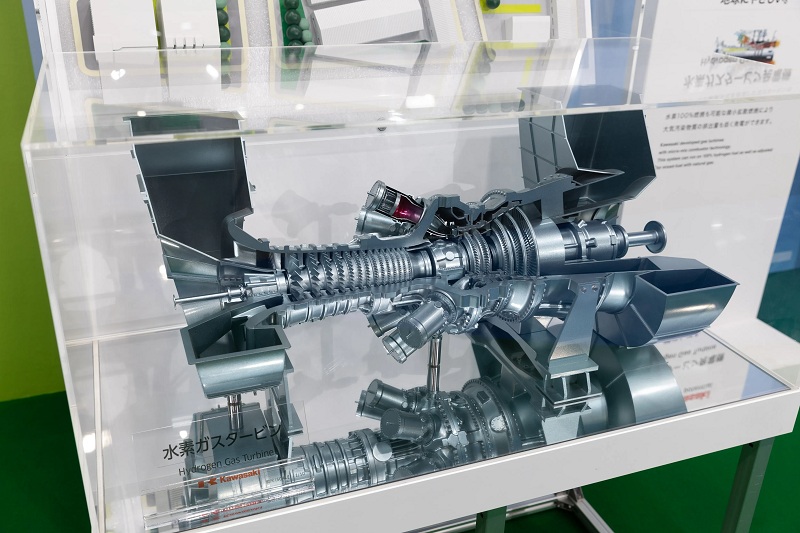 Scale model of a hydrogen gas turbine generator — Exhibited by Kawasaki Heavy Industries
Hydrogen is also being explored for use in factories. An energy management system (EMS) was on display, combining solar panels, storage batteries, and pure hydrogen fuel cells to optimize energy consumption. A hydrogen storage and delivery system using metal hydride alloys, designed to support hydrogen-based power generation at industrial sites, was showcased alongside a hydrogen-fired boiler. Together, these technologies contribute to efforts to decarbonize industrial operations.
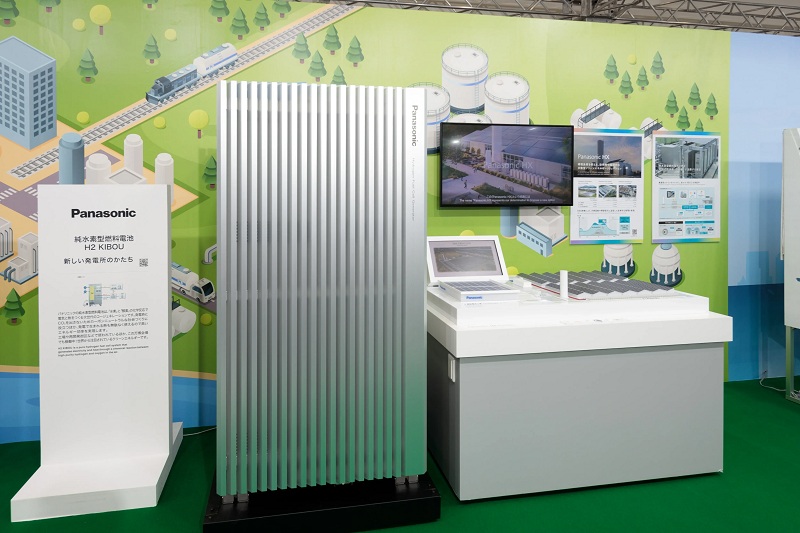
Pure hydrogen fuel cell (silver unit at center). Model of a factory equipped with an EMS shown at right. — Exhibited by Panasonic Corporation
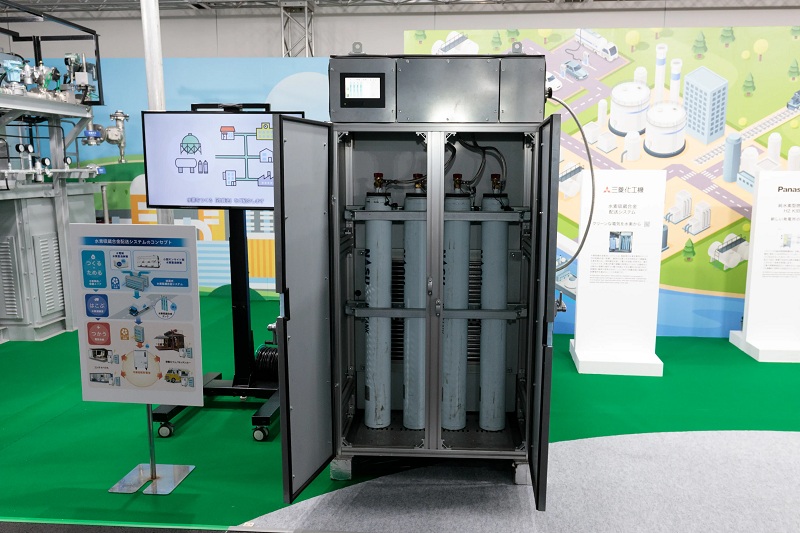
Hydrogen storage and delivery system using metal hydride alloys. High-purity hydrogen is absorbed into metal hydrides inside dedicated tanks, transported to sites where electricity is needed, and then released to generate power using a fuel cell. Because hydrogen can be stored and transported safely and efficiently, the system is particularly well suited for supplying electricity in relatively small-scale settings, such as during disasters. It operates without noise or exhaust emissions and can be installed without major regulatory constraints, offering flexibility in deployment. — Exhibited by Mitsubishi Kakoki Kaisha, Ltd.
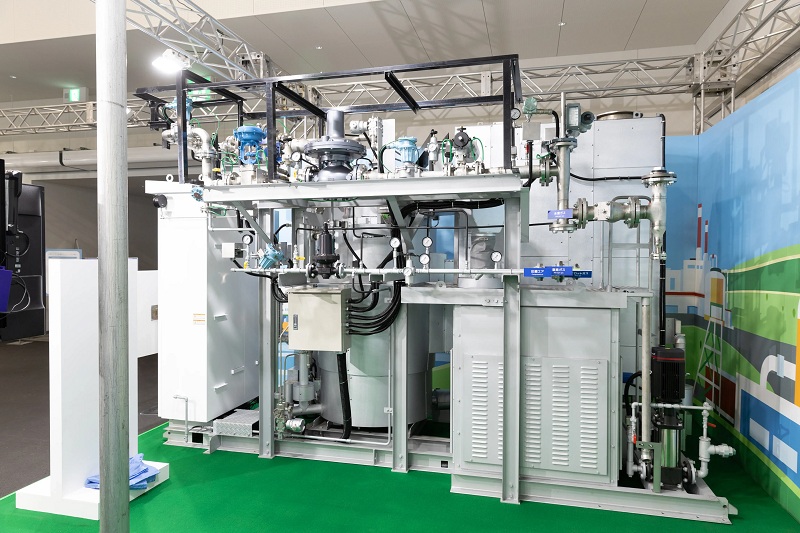
Hydrogen-fired boiler. The system produces steam by burning hydrogen. Steam serves as a source of heat not only in factories but also in a wide range of everyday applications. In Japan, boilers account for about 2 percent of CO2 emissions from the industrial sector. Because hydrogen-fired boilers generate no CO2 during combustion, they are attracting attention as a way to reduce emissions. — Exhibited by Miura Co., Ltd.
Mobility
In the mobility sector, hydrogen serves as a fuel for both fuel cell systems and internal combustion engines. In fuel cells, hydrogen reacts with oxygen to generate electricity that powers an electric motor, while in engines it is burned to produce drive power. In either case, no CO2 is emitted during operation. At Hydrogen Park, hydrogen-powered mobility solutions on display ranged from railway vehicles and passenger cars to electric-assist bicycles equipped with hydrogen fuel cells.
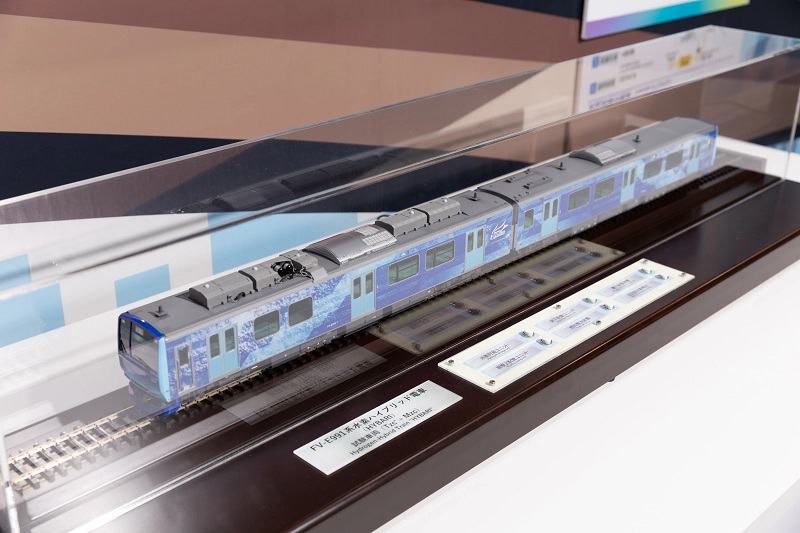
Scale model of a hydrogen hybrid train. The train operates on a hybrid system that combines a hydrogen fuel cell with a main traction battery. It is the world’s first fuel cell railway vehicle capable of using high-pressure hydrogen at 70 MPa. — Exhibited by East Japan Railway Company (JR East)
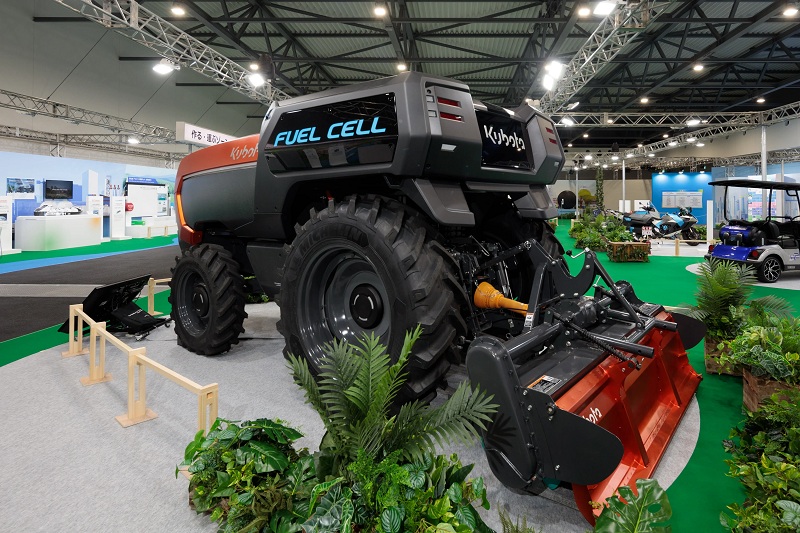
Concept model of an autonomous hydrogen fuel cell tractor. Designed for unmanned operation through autonomous driving and remote control. Demonstration tests are planned to examine hydrogen supply methods for agricultural use and to assess its suitability for farming operations. — Exhibited by Kubota Corporation
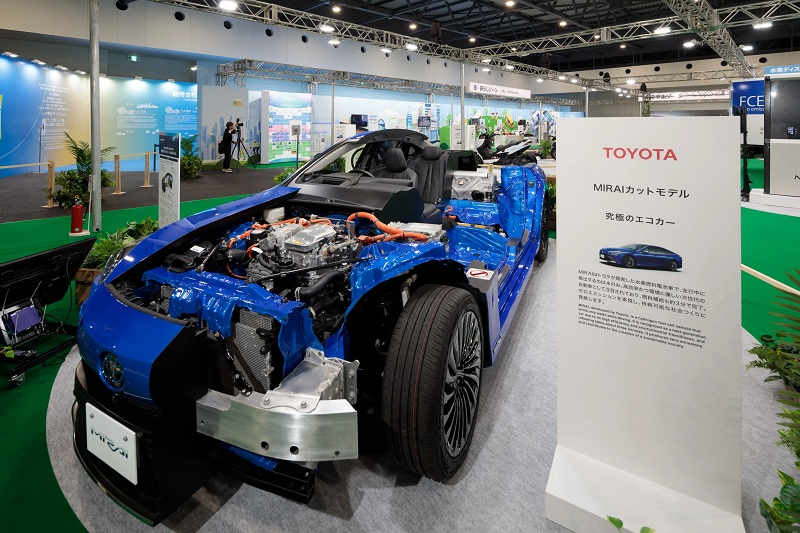
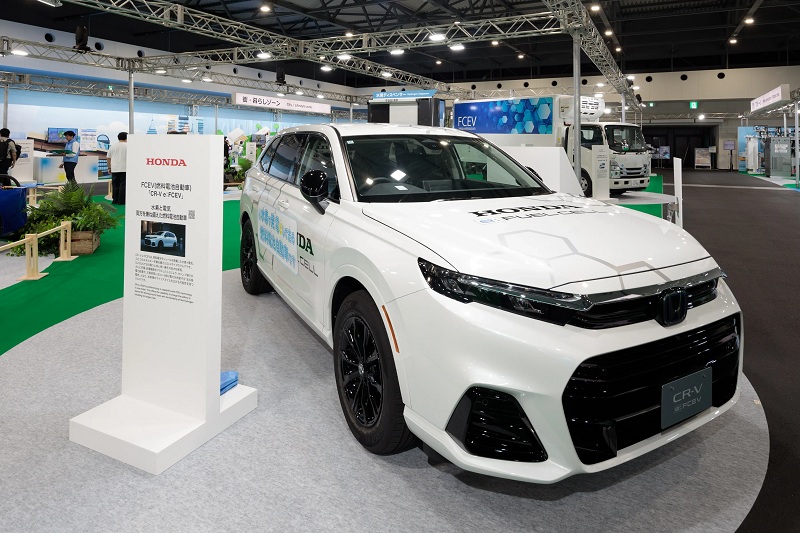
Fuel cell vehicles powered by hydrogen have already been commercialized. Shown at left is Toyota Motor Corporation’s MIRAI cutaway model, and at right is Honda Motor Co., Ltd.’s CR-V e:FCEV. — Exhibited by Toyota Motor Corporation and Honda Motor Co., Ltd.
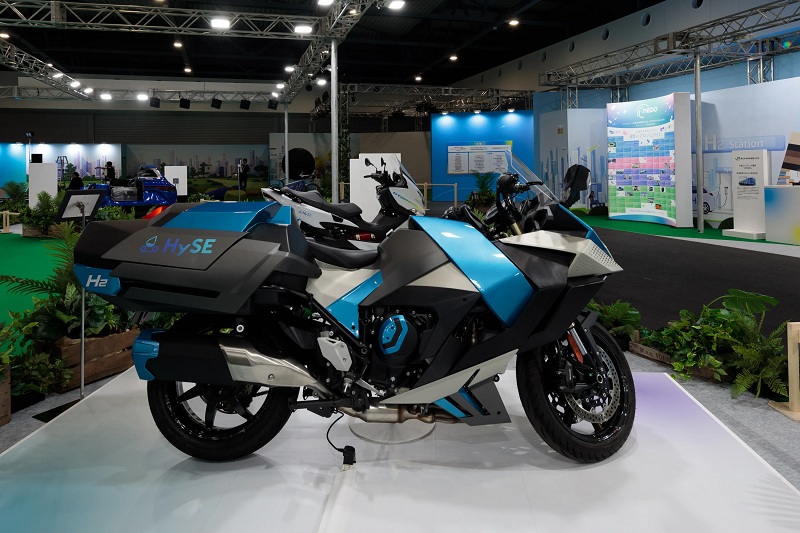
Concept model of a hydrogen engine motorcycle. The engine is based on the 998 cc in-line four supercharged engine of Kawasaki’s Ninja H2, modified for direct in-cylinder injection of hydrogen fuel. — Exhibited by Kawasaki Heavy Industries
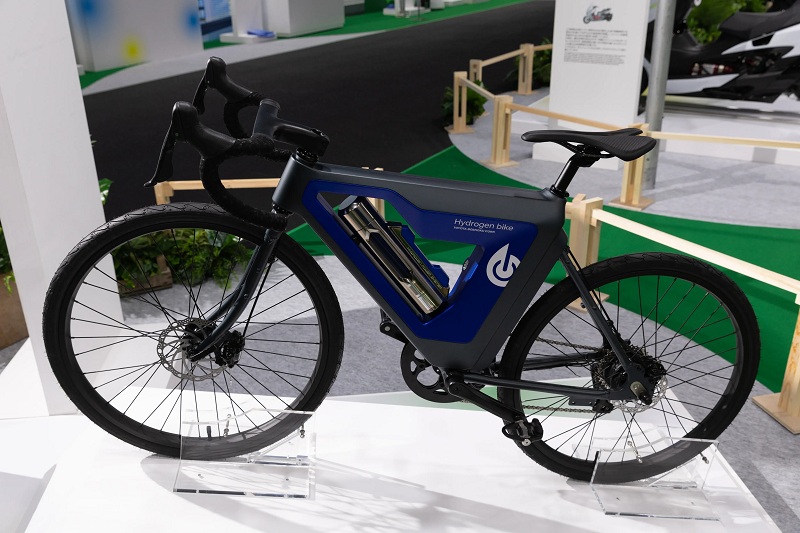
Electric-assist bicycle equipped with a hydrogen fuel cell. The palm-sized fuel cell unit is mounted on the bicycle and generates electricity to power the motor. A single onboard hydrogen tank enables assisted riding for up to 80 kilometers. A compact hydrogen refueling device for easy replenishment is currently under development. — Exhibited by Toyota Boshoku Corporation
At Hydrogen Park, visitors were also introduced to WIND HUNTER, a vessel designed to produce hydrogen at sea. The ship uses wind captured by its sails for propulsion, while turbines installed beneath the hull generate electricity that is used to produce hydrogen.
The vessel sails to areas with favorable wind conditions for power generation. The hydrogen produced on board is then reacted with toluene to form methylcyclohexane (MCH), reducing its volume to about one five-hundredth before being stored in tanks. Once the tanks are full, the ship calls at ports of consumption to supply the hydrogen.
In essence, the concept combines offshore wind power generation with hydrogen production, creating a hybrid system with the potential to transform the seas surrounding Japan into a new source of energy. NEDO is supporting the project through studies to optimize the hydrogen production vessel, surveys to identify suitable wind conditions in waters around Japan, the construction of a demonstration vessel, and studies on potential hydrogen supply destinations.
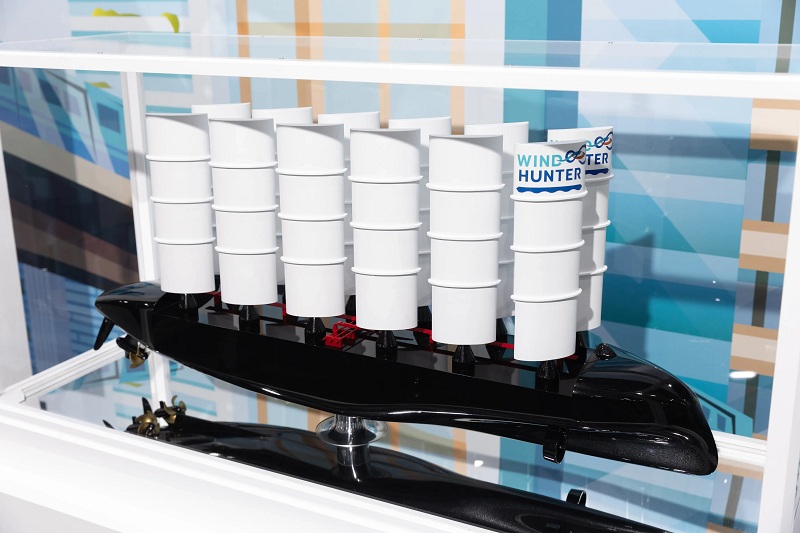
Scale model of the hydrogen production vessel WIND HUNTER — Exhibited by Mitsui O.S.K. Lines, Ltd.
Urban & Daily Life
Hydrogen technologies are also finding their way into everyday urban life. At Hydrogen Park, examples included social robots powered by hydrogen fuel cells and hydrogen-fueled cooking stoves designed for daily use.
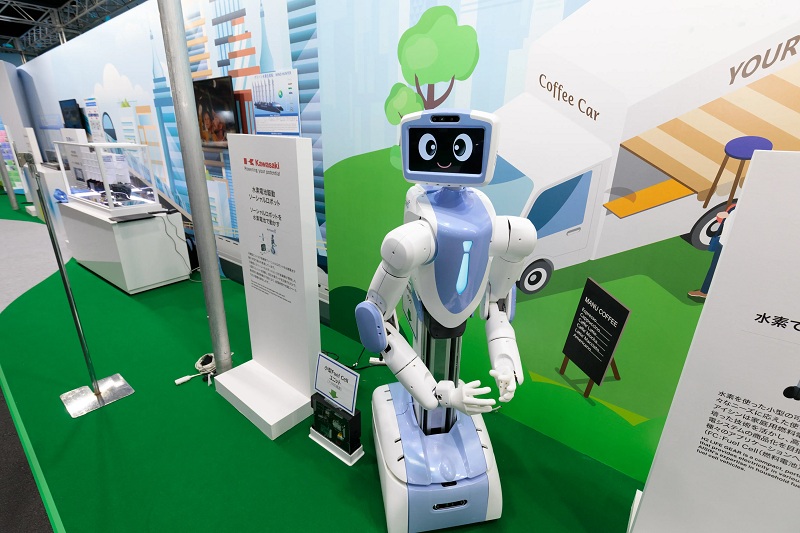
Social robot powered by a hydrogen fuel cell. The Kawasaki Heavy Industries robot is equipped with a compact fuel cell unit developed by Toyota Boshoku Corporation. By simply replacing a low-pressure hydrogen tank, the robot can operate continuously for extended periods, helping address challenges such as charging time and the need for charging space. — Exhibited by Kawasaki Heavy Industries
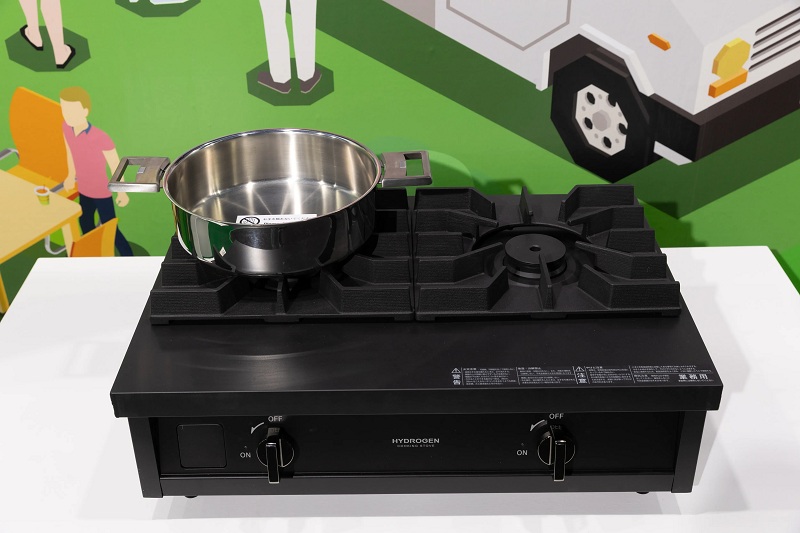
Commercial hydrogen gas stove. Developed to promote the safe use of hydrogen as a familiar energy source in everyday life, Rinnai has been working since 2022 to establish technologies for safely burning hydrogen and expand its range of practical applications. — Exhibited by Rinnai Corporation
At Hydrogen Park, visitors were served coffee roasted using hydrogen. Because the roasting process emits no CO2, the method provides a more environmentally friendly alternative. It also enables finer control of heat than conventional fuel-based roasting, broadening the range of flavors.
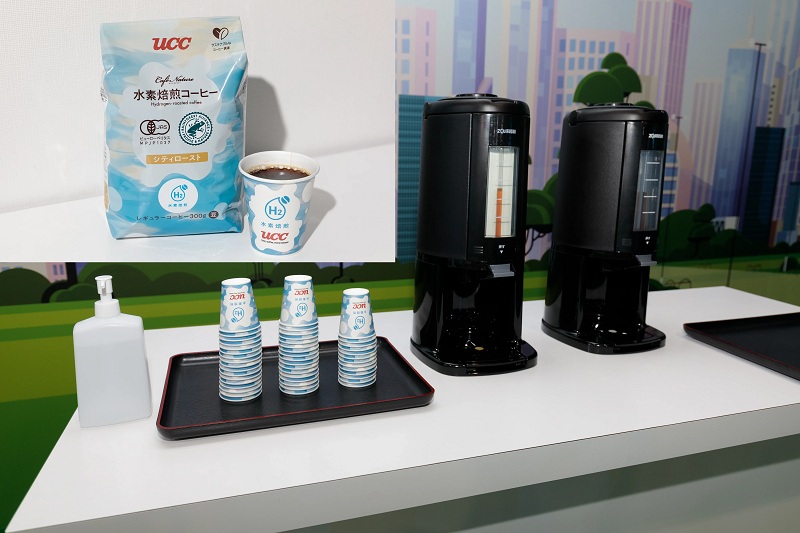
Hydrogen-roasted coffee served to visitors at Hydrogen Park
Aerospace
Hydrogen applications were showcased not only on land and at sea, but also in the air and in space. Among the exhibits were a hydrogen fuel cell–powered drone capable of flying for 80 to 120 minutes, as well as a scale model of a lunar rover scheduled for launch in 2031.
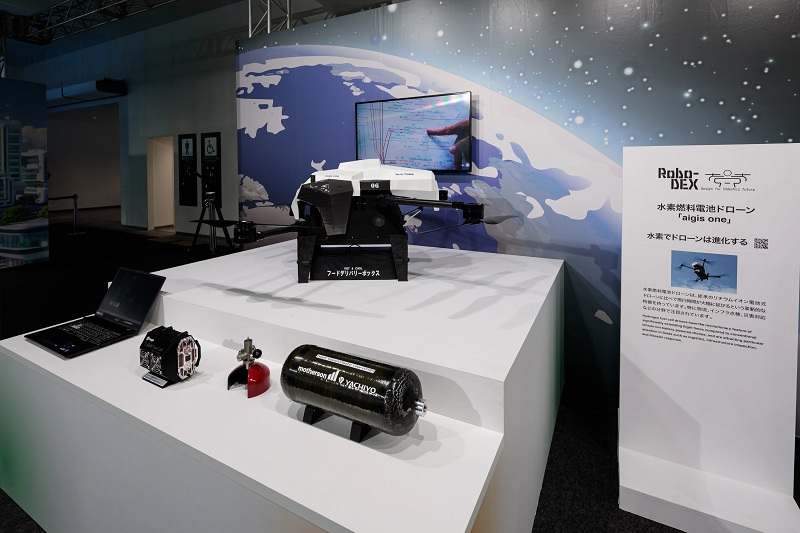
Hydrogen fuel cell–powered drone (center). Compared with conventional lithium-ion battery drones, it offers significantly longer flight times. The technology is attracting attention for applications such as logistics, infrastructure inspection, and disaster response. Components including hydrogen cylinders were also displayed. — Exhibited by RoboDEX Inc.
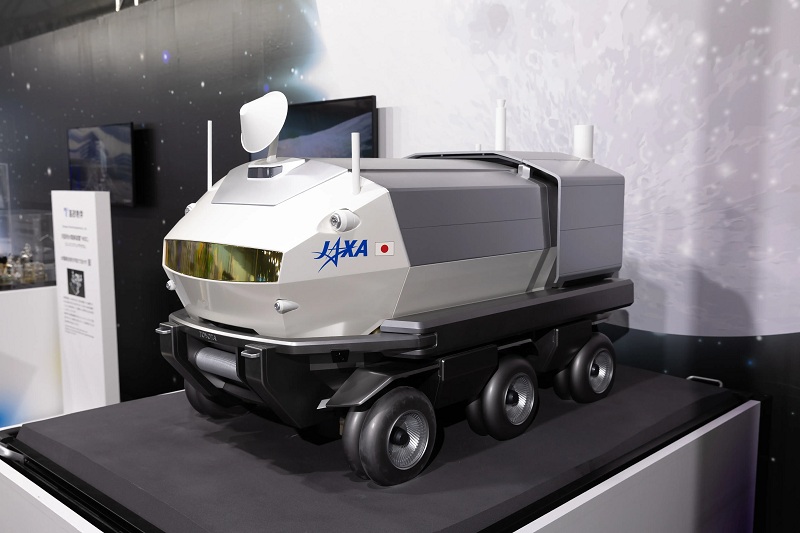
Pressurized crewed lunar rover. To secure the energy required to survive the lunar night, the rover is planned to use a regenerative fuel cell (RFC) system. The system uses electricity from solar panels to split water into hydrogen and oxygen, which are used in a fuel cell to generate power. Water produced during power generation can be electrolyzed again, enabling a regenerative cycle. — Exhibited by Japan Aerospace Exploration Agency (JAXA) and Toyota Motor Corporation
In this article, we have highlighted examples showing how technological development for hydrogen utilization is steadily advancing and bringing the vision of a hydrogen-based society closer to reality. Hydrogen is opening up new opportunities for business—in short, hydrogen represents a major opportunity.
Some of the technologies introduced here are not directly supported by NEDO. Nevertheless, NEDO continues to support a wide range of technology development and deployment efforts aimed at realizing a hydrogen-based society. Working together with diverse partners, the organization will continue to expand the possibilities of hydrogen. For the latest updates on NEDO’s activities, please visit the NEDO website.
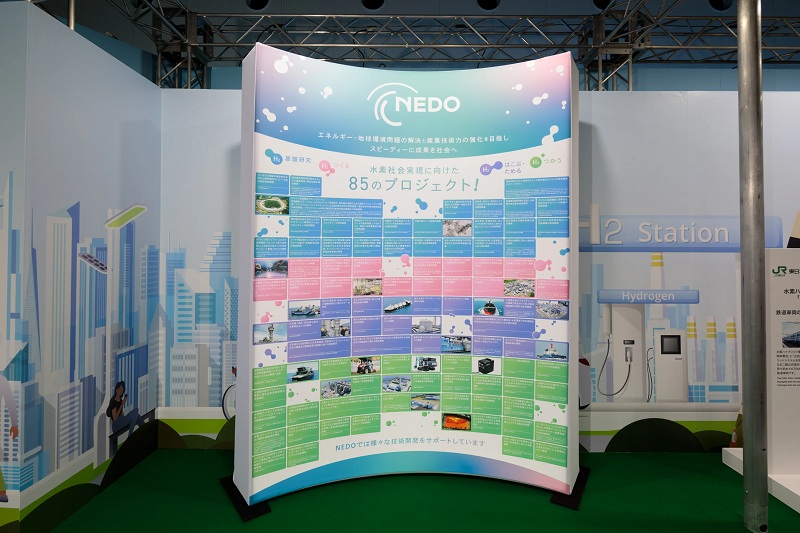
NEDO supports a wide range of projects aimed at realizing a hydrogen-based society.