
Long Duration Energy Storage: Enabling a Renewable-Centered Power System
February 2, 2026
What if the electricity generated by solar panels during the day could still be used after sunset? What if wind-generated electricity remained available even during periods of low wind?
Long Duration Energy Storage (LDES), a focus area for the New Energy and Industrial Technology Development Organization (NEDO), makes this possible. LDES refers to technologies capable of storing energy for extended periods, typically eight hours or more, and supplying it when required.
By storing surplus power produced on sunny or windy days and releasing it during nighttime or low-wind conditions, LDES helps manage the variability inherent in renewable energy. This capability enables renewable energy to serve as a central component of the power system.
Interest in LDES is accelerating worldwide, and deployment as part of energy infrastructure is expected to progress from 10 GWh in 2025 to 118 GWh in 2035 at an annual rate of 28.0%.
1. BloombergNEF: “2026 Long-Duration Energy Storage outlook”
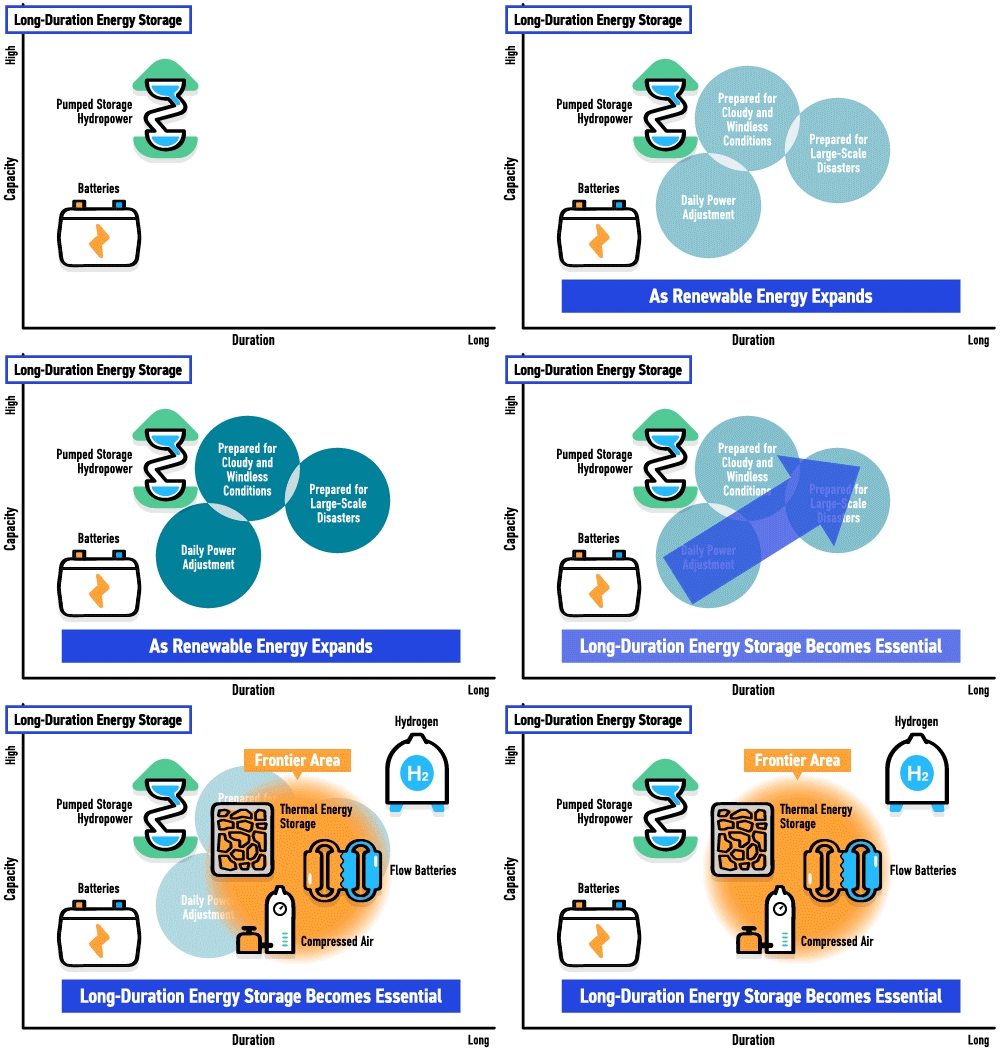
NEDO proposes long duration energy storage technologies as a frontier area that can enable the large-scale integration of variable renewable energy sources such as solar and wind power.
When the share of renewable energy in the power mix exceeds approximately 50 percent, short-duration storage technologies such as lithium-ion batteries alone may face increasing difficulty in responding to fluctuations in electricity supply. Japan has set a target of achieving a renewable energy share of around 40 to 50 percent in its power mix by fiscal year 2040. In preparation for this transition, research and demonstration of long duration energy storage technologies will need to advance from an early stage.
In addition, long duration energy storage can also serve as an emergency power source in the event of large-scale disasters.
Diverse Approaches to Long Duration Energy Storage
Energy storage encompasses technologies that store surplus electricity generated by power sources and release it when needed, helping to manage significant fluctuations in energy supply.
Where short-duration storage technologies are typically used to balance supply and demand over minutes to several hours, long duration energy storage is expected to address supply–demand gaps that extend across days or more. A variety of long duration energy storage technologies are under development, each offering distinct advantages depending on how and where they are deployed.
Pumped hydro storage systems, for example, use surplus electricity generated during periods of low demand to pump water to a higher elevation, then generate electricity when the water is released during periods of increased demand, such as at night. While this approach allows for large-capacity storage over extended periods, it is limited by geographical conditions.
In recent years, attention has also turned to new approaches with the potential to reduce costs. These include thermal energy storage technologies using molten salt or sand, as well as compressed air energy storage systems that make use of underground spaces.
Long duration energy storage technologies can broadly be grouped into four main categories:
- Mechanical Energy Storage (e.g., pumped hydro, compressed air):
- These systems store energy as gravitational potential or compressed air pressure. Cost reductions are being explored by repurposing existing infrastructure, including abandoned mines.
- Thermal Energy Storage (e.g., molten salt, sand):
- Energy is stored in the form of heat. Large-scale sensible heat storage using materials such as sand or crushed stone is making longer storage durations increasingly feasible. Efforts are also advancing to achieve higher energy density through high-temperature storage above 600°C and through latent heat storage using materials such as molten salt.
- Electrochemical Storage (e.g., flow batteries):
- Flow batteries store electrolyte solutions in external tanks, enabling large-capacity and long-life energy storage. Technologies such as vanadium redox flow batteries and zinc–bromine batteries are moving toward practical application.
- Chemical Energy Storage:
- Surplus electricity can be used to produce hydrogen through water electrolysis. The hydrogen may be stored directly or converted into ammonia for storage. Depending on demand, energy can later be supplied through fuel cells or combustion. Improving the efficiency of hydrogen transport and storage remains an important focus, and alternative methods, including storing energy in compounds such as calcium oxide, are also under consideration.
By advancing technologies adapted to a wide range of deployment environments and applications, NEDO seeks to make the most of renewable energy while strengthening grid stability in urban centers and supporting electricity systems tailored to regional conditions.