
Geologic Hydrogen: The ideal energy source combining environmental performance and low cost
March 30, 2026
What if hydrogen could be produced directly from the ground, like oil or natural gas?
This once speculative idea is moving closer to reality with growing interest in “geologic hydrogen.” Geologic hydrogen refers to hydrogen generated through geological processes and chemical reactions within the Earth’s crust. If developed at scale, geologic hydrogen could help accelerate global decarbonization while Improving Japan's energy self-sufficiency rate and supporting new industrial development.
Research has identified several pathways through which geologic hydrogen is generated. One involves reactions between water and iron-rich rocks such as peridotite. Another occurs when water interacts with rocks containing radioactive elements, such as granite. In addition, hydrogen may migrate upward from deeper regions of the Earth, including the mantle and core.
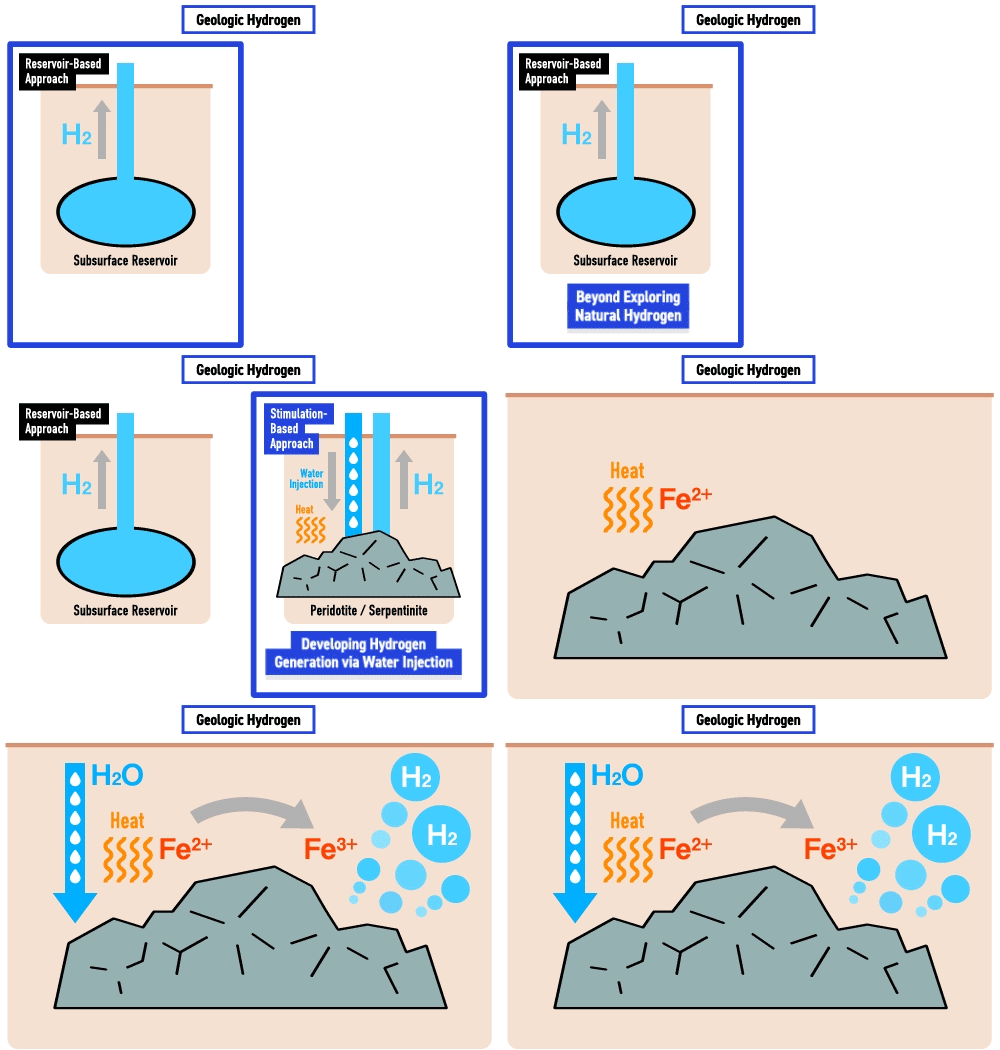
Among these processes, serpentinization, a reaction in which iron-rich peridotite interacts with water to form serpentine minerals, is attracting particular attention. Because it can generate hydrogen relatively rapidly compared with other pathways, it is considered especially promising for potential energy applications.
Approaches to producing hydrogen through serpentinization can be broadly divided into two categories. One focuses on extracting hydrogen that has naturally accumulated underground. The other aims to stimulate hydrogen generation by using suitable geological formations, such as peridotite-rich layers with favorable thermal conditions, and injecting water underground to promote the reaction.
The New Energy and Industrial Technology Development Organization (NEDO) is focusing its research and development efforts on this latter approach, enhancing hydrogen production through controlled geological processes. NEDO regards geologic hydrogen as a new clean energy resource and is advancing research to support its exploration and eventual deployment.
The Japanese archipelago, shaped by active tectonic processes, contains scattered peridotite formations at depth. These distinctive geological conditions are considered well suited to geologic hydrogen generation.
NEDO is pursuing efforts to capitalize on these advantages through continued technology development, with the goal of supporting the commercialization of geologic hydrogen and advancing next-generation energy innovation.
Access to domestically produced, cost-competitive clean hydrogen would strengthen Japan’s energy security and enhance its self-sufficiency. It could also help stimulate domestic industry and support regional revitalization.
In February 2025, NEDO worked with the Japanese Association for Petroleum Technology and the Japan Organization for Metals and Energy Security (JOGMEC) to host a Natural Hydrogen Workshop. The event examined the potential of domestic natural hydrogen resources in light of Japan’s geological characteristics and explored their implications for energy self-sufficiency and the transition to a decarbonized society.
The ideal energy source that combines environmental performance with low cost
NEDO’s interest in geologic hydrogen is also driven by its environmental performance and potential cost advantages. Hydrogen does not emit CO2 when used, making it central to efforts toward a decarbonized society. Conventional production methods, however, have presented trade-offs.
Hydrogen derived from natural gas is relatively inexpensive but generates substantial CO2 emissions during production, raising environmental concerns. By contrast, hydrogen produced through water electrolysis is clean, yet high electricity costs have limited its commercial viability.
Geologic hydrogen presents an alternative. By drawing on subsurface minerals and thermal conditions, it offers the potential to reduce CO2 emissions during production. Some estimates place production costs at approximately US$0.5 to 1 per kilogram (around ¥7–14 per Nm³), potentially below the Japanese government’s 2050 target price of ¥20 per Nm³.
NEDO considers cost competitiveness to be central to the practical deployment of geologic hydrogen and is analyzing examples of hydrogen seepage around the world using both domestic and international data.
In Mali, West Africa, electricity has been generated using hydrogen gas with a purity of approximately 97 percent that emerges from well water. This case is often highlighted as an early demonstration of the broader potential of geologic hydrogen.
With these practical prospects in view, NEDO continues its efforts to establish geologic hydrogen as one of the future sources of clean energy supply.