
Discovery and Application Move Science Forward: How Entrepreneurship Made It Possible to Continue My Research
—Special Dialogue: Nobel Laureate SAKAGUCHI Shimon and NEDO Chairman SAITO Tamotsu—
March 2, 2026
SAKAGUCHI Shimon, the 2025 Nobel Prize laureate in Physiology or Medicine, helped open new avenues for treating diseases including cancer through his discovery of regulatory T cells — immune cells that act as a brake on the body’s immune response — and his work clarifying their role. NEDO has supported RegCell, Inc., a startup co-founded by Sakaguchi, through its Program for Supporting Research and Development–Based Startups since 2017. In this special conversation, Sakaguchi speaks with SAITO Tamotsu, Chairman of NEDO, about the relationship between basic research and its path to social implementation.
-
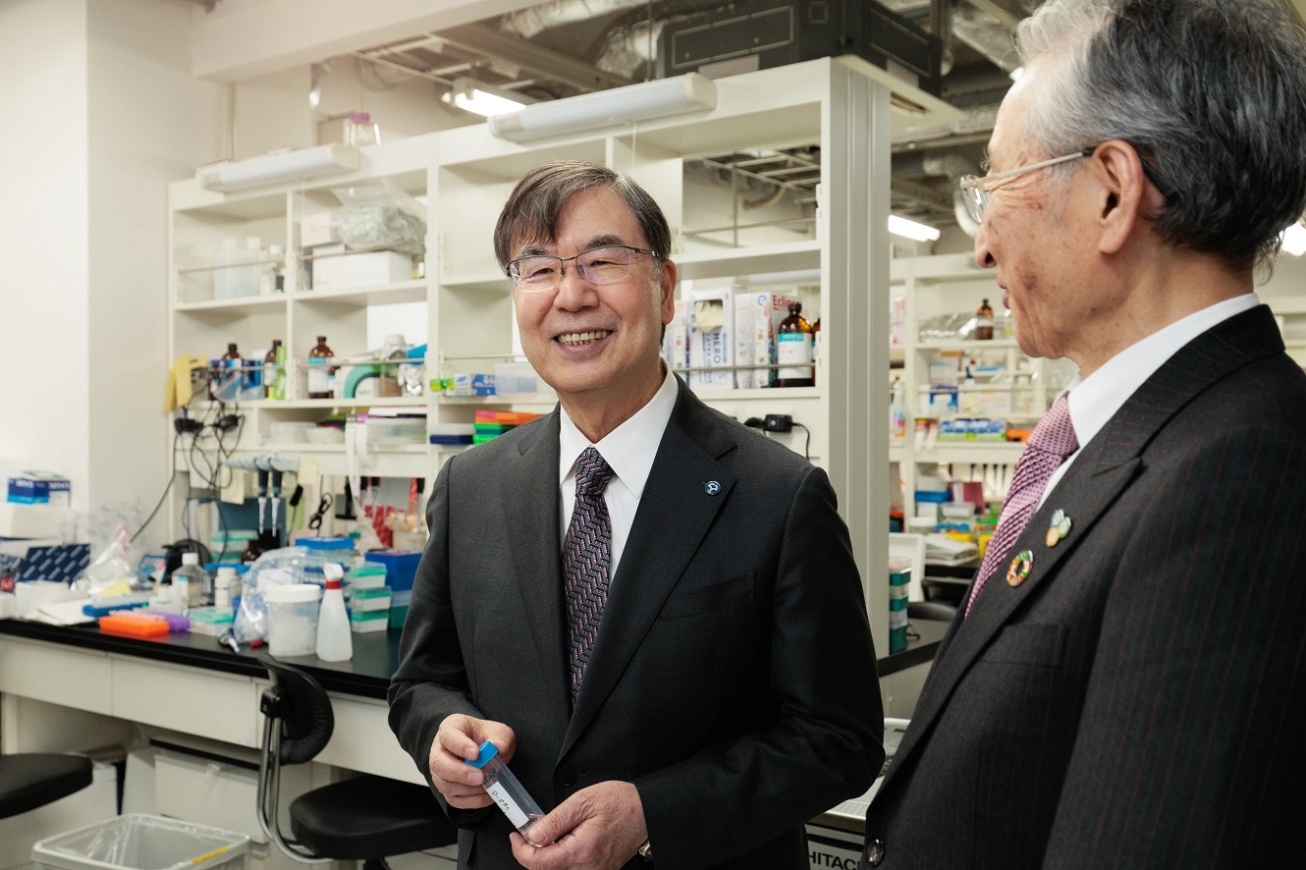
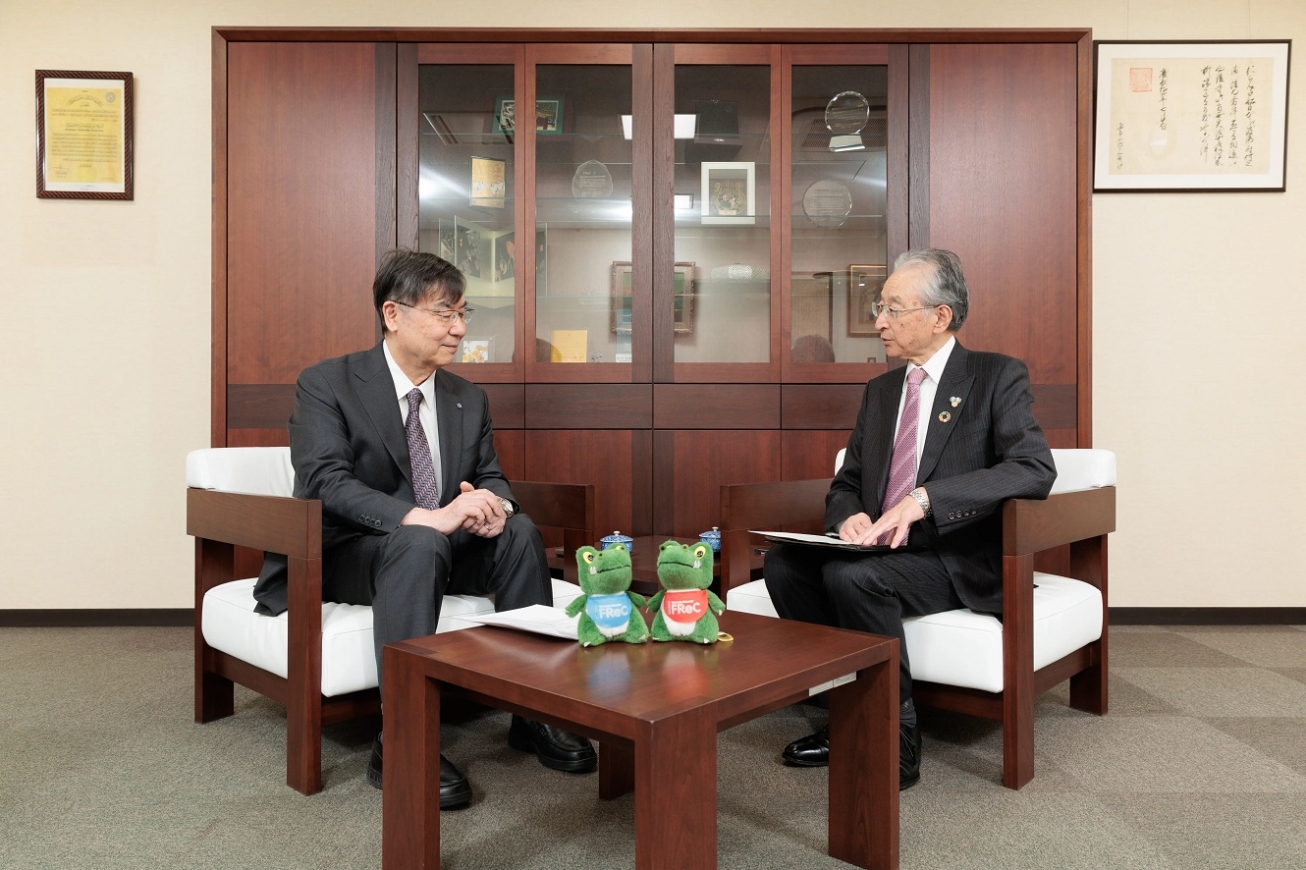
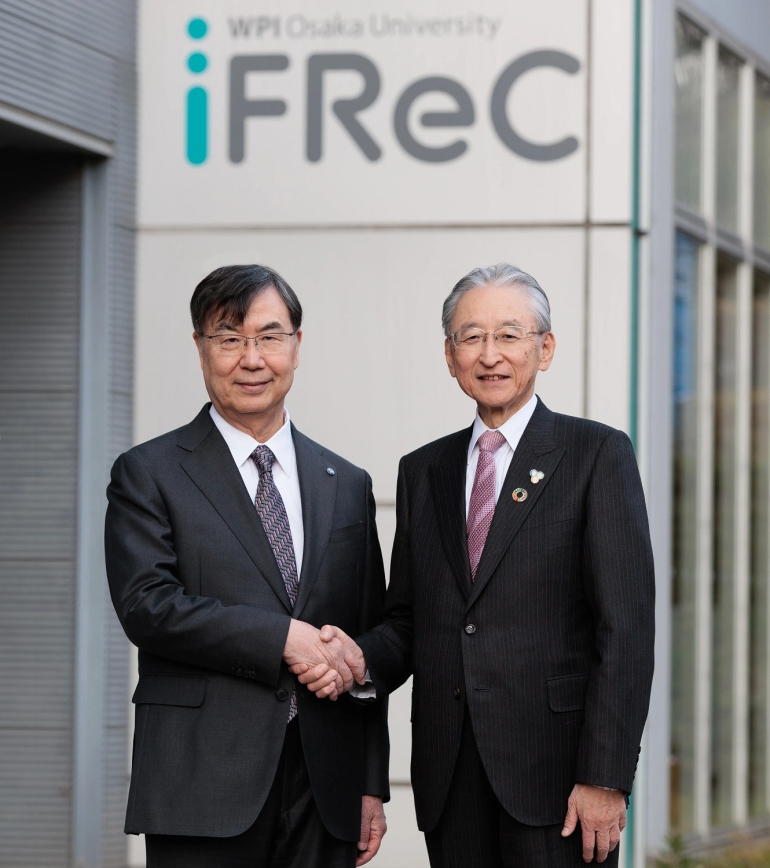 SAKAGUCHI Shimon (left) and NEDO Chairman SAITO Tamotsu (right)
Plenty of Ideas in Universities and Labs — but a Long Road to Application
Saito: First of all, I would like to offer my heartfelt congratulations on receiving the Nobel Prize in Physiology or Medicine. Let me begin by asking how you felt when you learned of the award. As an organization that supports the social implementation of research results, NEDO is especially pleased to see your work recognized — particularly given that you went on to launch a startup based on your findings and pursue their practical application.
Sakaguchi: This prize ultimately recognizes research that contributes to human health, whether by preventing or treating disease. Receiving the award has made me keenly aware of the high expectations for how our work might help overcome real diseases. To live up to those expectations, we will continue to press ahead with our research.
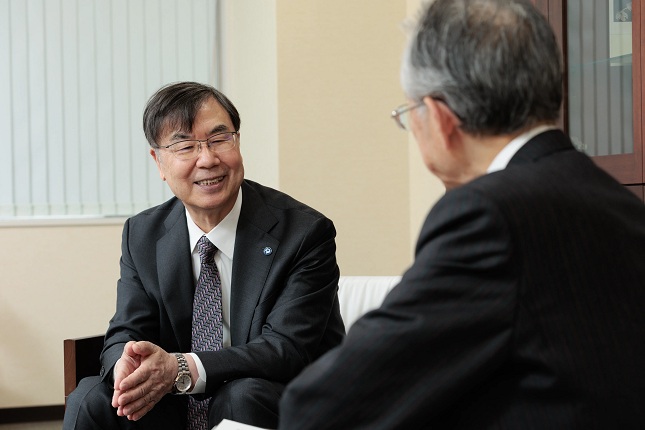
Saito: You began studying regulatory T cells in 1979, and in 1995 you were the first to demonstrate their existence and importance. I imagine the journey to that discovery was not an easy one. How did you overcome the challenges you faced along the way?
Sakaguchi: I have long been interested in immunology, especially the concept of “immune tolerance.” The immune system responds to viruses and bacteria, yet it does not normally attack the body itself — something like a yin-and-yang balance between opposing forces. For many years, however, the reason for this remained unclear. I therefore continued my research with the working hypothesis that the immune system might operate as a flexible and dynamic regulatory system.
That work eventually led us, in 1995, to identify a molecular marker and demonstrate that it defined regulatory T cells. In 2003, the gene Foxp3, associated with autoimmune diseases, allergies and inflammatory bowel disease, was identified, clearly linking regulatory T cells to human disease. Over the following two decades, researchers around the world deepened our molecular understanding of these cells and explored their application to human disease. I believe it was the accumulation of those efforts that ultimately led to the Nobel Prize.
Saito: NEDO supported Kyoto University, where you were based at the time, through the project Development of Innovative Antibody Engineering Technologies from 2006 to 2009. In 2017, we also supported RegCell, Inc., the startup you co-founded, through our Program for Supporting Research and Development–Based Startups. Looking back, how do you view the role NEDO played in helping bring your research closer to social implementation?
Sakaguchi: As we pursue basic research, we often think that, with a bit more ingenuity, our work could lead to an interesting application. In academia, however, the primary focus is on publishing papers, so even when such ideas arise, it can be difficult to pursue them further. In that sense, being invited to take on the challenge and given the opportunity to explore those possibilities was a very valuable experience for us. Universities and research institutes are full of promising research findings, but turning them into social implementation is not easy, given the constraints of time and funding. We have greatly appreciated NEDO’s support, and I hope we will continue working together.
Saito: Thank you. Since 2014, NEDO has stepped up its support for research and development–based startups, and in recent years has expanded that support to include deep tech as well. What prompted you to become involved in launching a startup?
Sakaguchi: Since our research has always been closely tied to medicine, we were focused on how diseases related to the immune system might be controlled. We also hoped to move beyond basic research and into applied research, as is often the case in Europe and the United States, but at the time it was not easy for us to take that step.
-
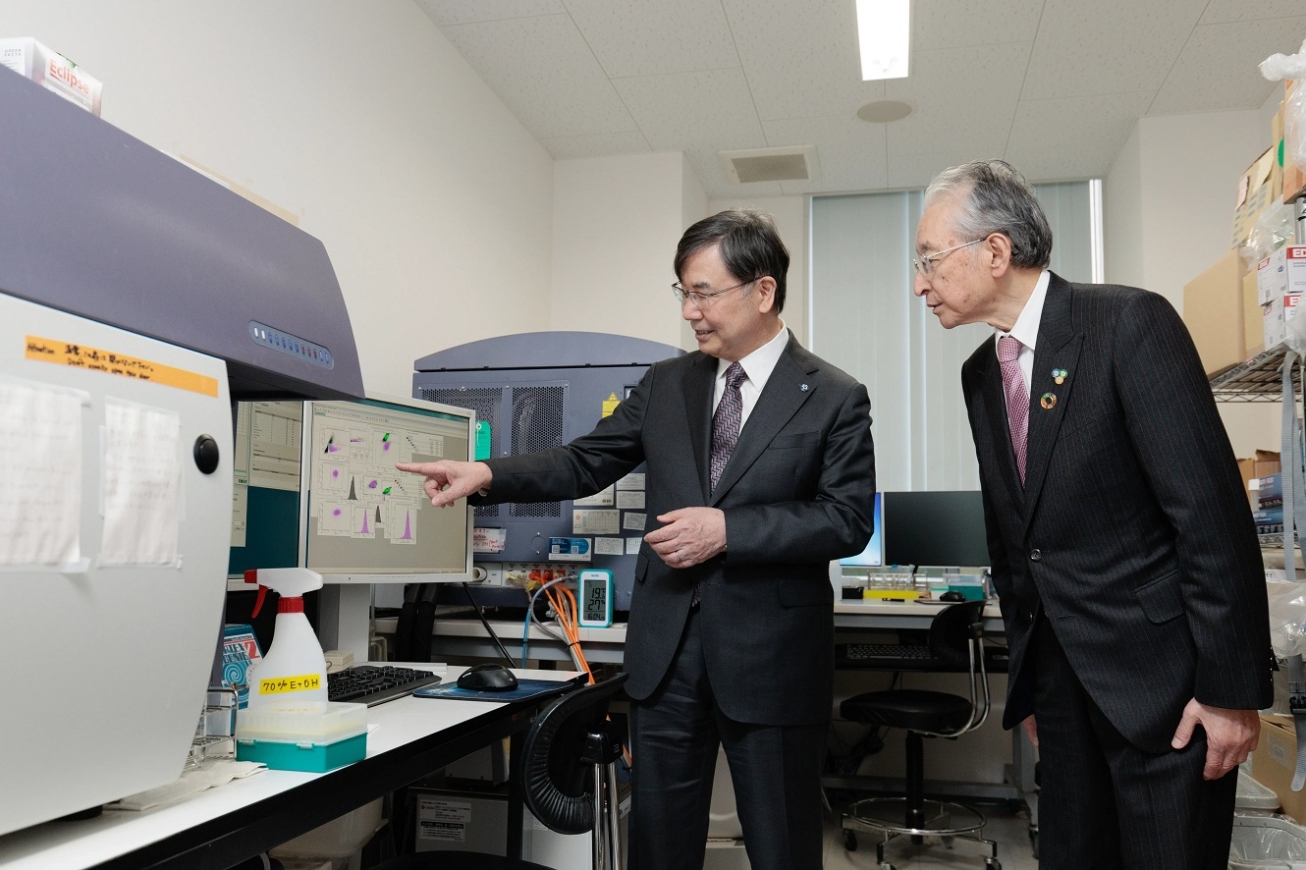 Sakaguchi explains the data on the monitor of a flow cytometer, an instrument used to rapidly measure and analyze cells
Sakaguchi: I believe much of this stemmed from institutional factors. In Japan, it has been difficult to move toward applications while continuing academic research, and there is still considerable debate over whether researchers should devote their time to such efforts. For those reasons, I only founded the startup after reaching retirement age. One motivation was simply the feeling that we should try doing it ourselves.
Another reason was simply that I wanted to continue my research. As researchers grow older, it becomes increasingly difficult to secure funding. So I began to think that the best approach might be to pursue both social implementation and basic research, and to continue the fundamental studies needed to support that work. Founding a startup made it possible for me to keep my research going while also contributing to society.
Helping Startups Navigate the “Valley of Death”
Saito: Has the work of RegCell had any influence on your research?
Sakaguchi: Medicine and clinical practice have always been closely linked. Researchers often speak of moving discoveries “from bench to bedside, and from bedside back to the bench.” If I were to use an analogy, it is a bit like turning sugarcane into sugar. Turning sugarcane into brown sugar is a messy and labor-intensive process, while refining that brown sugar into white sugar produces something that looks cleaner and more polished. Yet in science, it is usually that first, rougher stage—the initial discovery—that is recognized by the Nobel Prize.
That said, both are indispensable. Basic discoveries in medicine must be translated into clinical practice, and from the clinic come requests such as, “Could this be improved?” or “Could it be made easier to use?” It is this exchange between the laboratory and the clinic that allows research to broaden and deepen. Without both sides, scientific progress would eventually stall.
In many ways, basic research moves forward in response to society’s needs. If you look back at the history of immunology—one of the fields we have worked in—it began with a very practical problem. During wartime, when skin was transplanted onto soldiers who had suffered severe burns, the grafts were often rejected. The urgent question was how that rejection could be prevented.
In some cases, real-world problems give rise to scientific research, and the results of that work are later recognized with honors such as the Nobel Prize. At least in my view, in medicine and health care, research must move in both directions—from basic science to application, and from application back to basic science.
-
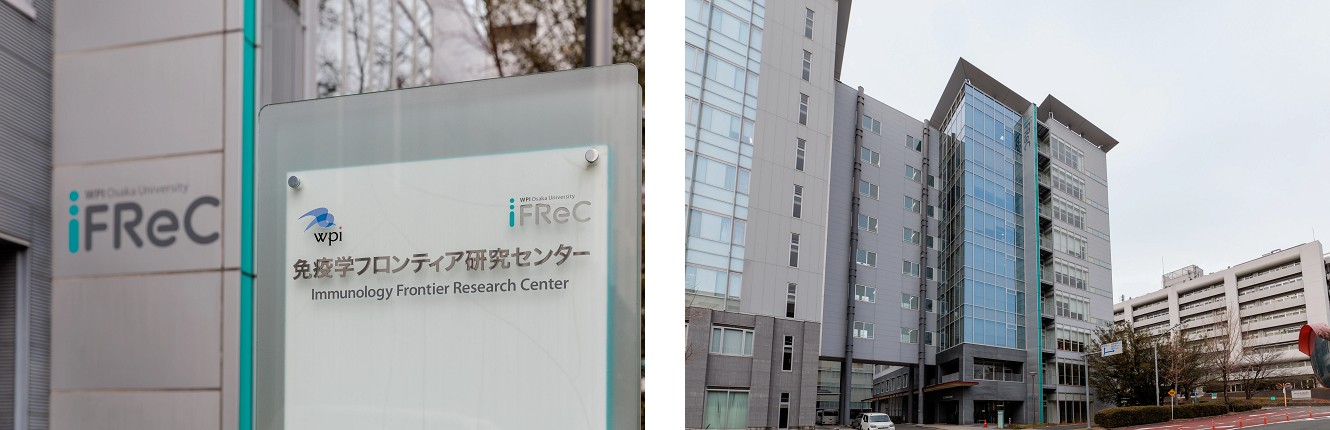 The Immunology Frontier Research Center (IFReC) at Osaka University, where Sakaguchi conducts his research.
Saito: In addition to supporting large-scale projects and startups, NEDO launched a prize-based program in fiscal 2023. The program invites a wide range of technological ideas and solutions through a contest-style format aimed at addressing technical and social challenges. We also organize symposia, study sessions, and networking events. How do you view these kinds of initiatives?
Sakaguchi: Basic research in Japan is often described as being in a difficult situation. While government support is essential, researchers themselves must also be more proactive. We need to think about how basic research can contribute to society and create an environment where researchers, including younger ones, can take on challenges without fearing failure.
In the United States, for example, systems are in place that allow even young researchers to experiment more freely. They might spend the week focused on their research and try something different on the weekend, and that spirit of experimentation is widely accepted. With prize programs and other forms of support, along with financial backing, young researchers can pursue new ideas without fear of failure. I hope Japan will move in that direction as well.
Saito: As a project management organization, NEDO aims to further strengthen its hands-on support to help bring technologies to commercialization and practical use. What advice would you offer to organizations like ours?
-
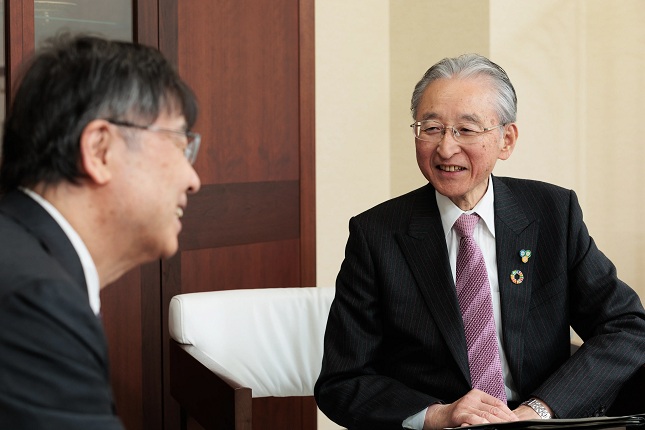
 Sakaguchi and Saito share a light moment while discussing support for startups.
Sakaguchi: The climate for startups in Japan has certainly improved, but compared with Europe and the United States it is still difficult to describe it as particularly active. As I mentioned earlier, part of the challenge lies in researchers’ own attitudes, but institutional structures also play a significant role. Even when startups grow and eventually go public, it is not unusual for fresh investment to dry up afterward, leaving them struggling to sustain their momentum.
Japan does have systems that support startups in their early stages, and there are cases where large pharmaceutical companies step in with acquisitions later on. The real challenge lies in the growth phase between those two points.
For Japanese startups to mature and succeed, there must be stronger support for that middle stage—neither the beginning nor the end. In that sense, I believe organizations such as NEDO should strengthen the kind of close, hands-on support that helps startups cross the “Valley of Death.”
Perseverance Brings New Ideas, and Luck Eventually Follows
Saito: Could you share your outlook for your research going forward?
Sakaguchi: Ultimately, the practical question is how far the immune system can be used to treat diseases such as cancer. Antibody drugs based on monoclonal antibodies have attracted wide public attention, and more recently cell therapies that use lymphocytes themselves have begun to enter clinical practice. As a result, the achievements of immunology research are increasingly translating into tangible medical treatments.
Prevention will likely become the next major focus. Today, antibody drugs are most commonly used for advanced cancers. But if the immune system can be boosted when cancer is first detected, it may be possible to prevent metastasis later on. Since about 90 percent of cancer deaths are due to metastasis, the real key is not only treating cancer once it has advanced, but beginning immunotherapy at a much earlier stage.
At the preventive stage, however, it would not make sense to rely immediately on expensive antibody drugs. What may be needed instead are treatments that are safe and easy to use—perhaps something like an oral medication—that can modestly boost the immune response. If that alone could lower the probability of future metastasis from 90 percent to 50 percent, it would mean saving 40 percent of patients. This kind of intermediate level of immune intervention will likely become increasingly important going forward.
The same idea applies not only to cancer but also to autoimmune and allergic diseases. Today, medicine tends to focus on treating disease after it appears. Yet in many cases we already know who is more likely to develop certain conditions. In those people, it may be enough to gently adjust the immune system in advance. Take hay fever. If we slightly suppress the immune response before symptoms appear each year, it may be possible to prevent the condition altogether. Because lymphocytes are living cells, such adjustments might remain effective into the following year, allowing some people to avoid hay fever entirely. In that sense, we need to build a form of medicine that is somewhat different from the way treatment has traditionally been approached.
Saito: NEDO supports not only large corporations but also universities, startups, and entrepreneurs. What message would you offer to fellow researchers?
Sakaguchi: I would encourage young researchers to approach their work with energy and curiosity. At the same time, it is important to allow yourself a little ambition—to think, “Why not try this as well?” and take a step forward.
Another key is to maintain a long-term perspective. Research rarely yields results quickly or easily. It is by continuing patiently, over time, that good ideas suddenly emerge. One must accept that meaningful work takes time and keep moving forward with a positive outlook. If you persevere, interesting ideas will eventually come, and with them, a bit of good fortune as well.
SAKAGUCHI Shimon
Distinguished Professor Emeritus, Osaka University; Specially Appointed Professor, Immunology Frontier Research Center (IFReC), Osaka University. Graduated from Kyoto University’s Faculty of Medicine in 1976. After serving in positions including Director of the Institute for Frontier Medical Sciences at Kyoto University, he became a professor at IFReC, Osaka University, in 2011. He has held his current positions since 2025. In 2016, he founded RegCell, Inc., a startup developing therapies for autoimmune diseases based on regulatory T cells.
SAITO Tamotsu
Chairman, New Energy and Industrial Technology Development Organization (NEDO). Graduated from the Faculty of Engineering at the University of Tokyo in 1975 and joined Ishikawajima-Harima Heavy Industries Co., Ltd. (now IHI Corporation). He later served as President and Chief Executive Officer and then Chairman of IHI Corporation. He has held his current position since April 2023.